Using a Hard Money Loan to Flip Houses in Orange County
A hard money loan to flip houses covers most of the purchase and the rehab, then gets paid off when you sell, usually within 6 to 18 months. In Orange County, lenders typically fund up to about 75% of the after-repair value, charge around 9% to 13% interest plus 1 to 3 points, and release rehab money in draws as the work gets done. The deal works when the numbers leave room for those costs and a profit.
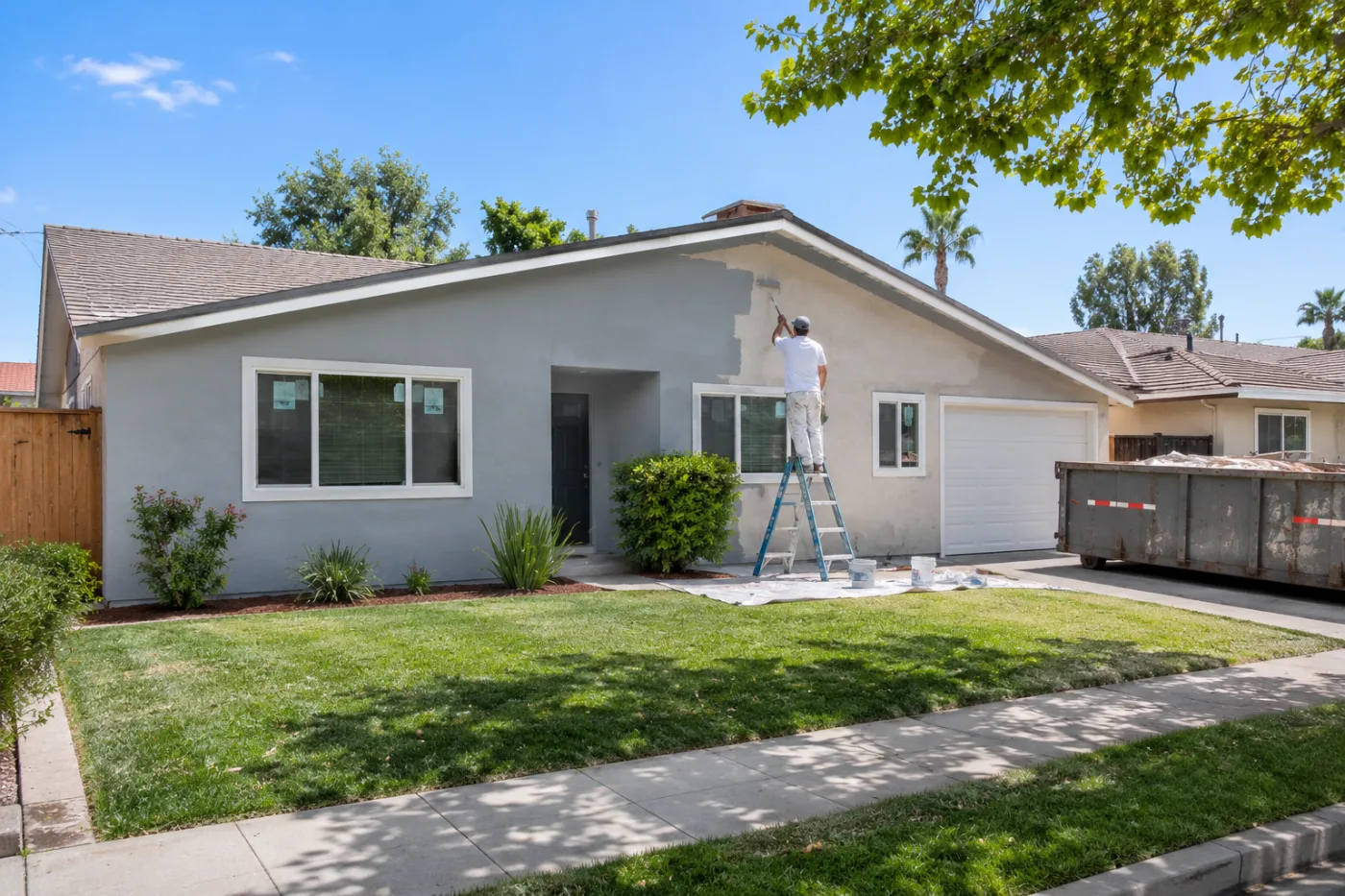
How a flip loan is sized
A bank looks at your income. A hard money lender looks at the deal. Most size a flip loan two ways and use whichever number is lower:
- A share of your total cost, the purchase price plus the rehab budget, often up to about 80%. Experienced flippers get closer to the top of the range; first-timers get less.
- A share of the after-repair value (ARV), what the house should sell for when it's done. Many lenders cap flip loans near 75% of ARV.
Whatever the loan doesn't cover, you bring: usually part of the down payment, closing costs, and enough cash to carry the project until it sells. Our guide on Fix-and-Flip Loans covers the loan programs themselves.
A sample Orange County flip, by the numbers
Here's how the math can look on a dated three-bedroom tract house. These are illustration numbers, not a quote.
Sample flip with a hard money loan
| Item | Amount |
|---|---|
| Purchase price | $800,000 |
| Rehab budget | $120,000 |
| After-repair value (ARV) | $1,200,000 |
| Loan: the lower of 80% of cost ($736,000) or 75% of ARV ($900,000) | $736,000 |
| Your cash for purchase and rehab | $184,000 |
| Interest at 11% for 8 months (on the full loan) | $53,973 |
| Points at 2% | $14,720 |
| Holding and buying costs (taxes, insurance, utilities, escrow) | About $25,000 |
| Selling costs (about 6% of sale) | $72,000 |
| Profit before taxes | About $114,000 |
Illustration only. Your rate, points, fees and sale price will differ, and interest is often charged only on rehab money as it's drawn, which lowers the cost.
That's roughly $114,000 on about $184,000 of your own cash plus costs, over eight months. Notice how much of the $280,000 gap between cost and sale price goes to interest, points, holding and selling costs. That's why experienced flippers run the numbers on total cost before they make an offer. A common rule of thumb is to pay no more than about 70% of the ARV minus the rehab, which here would be $720,000. This deal pays a bit more than that, which is common in a competitive Orange County market, and it still works because the ARV supports it.
How rehab draws work
The rehab money is usually held back at closing and paid out in stages. You or your contractor finish a stage, the lender sends an inspector, and the lender pays for the completed work. Then the next stage starts.
Plan your cash around that cycle. Contractors often want a deposit before each stage, so you'll be fronting money until each draw comes through. Ask the lender how fast draws are paid after an inspection, and whether interest is charged on the full loan or only on the money drawn so far.
The steps from offer to sale
- Run the numbers on the deal: purchase, rehab, ARV, loan costs and selling costs.
- Get the loan lined up before or right after your offer, so you can close on the seller's timeline.
- Send the lender your scope of work and budget; the appraisal will estimate the ARV from it.
- Close, start the rehab, and request draws as each stage is finished.
- List the house before the loan term runs short, and pay off the loan from the sale.
Orange County details that affect a flip
Older homes in Santa Ana's historic neighborhoods can come with extra review. The city says improvements or alterations to a property on its Register of Historic Properties require a Certificate of Appropriateness, so check a property's status before you price the rehab. French Park and Downtown Santa Ana are National Register districts.
Near the coast, exterior work and additions can need a coastal development permit, which adds time. A cosmetic flip usually stays clear of that, but a flip that adds square footage near the beach may not. Build any permit time into the loan term, and ask what an extension costs before you sign.
Mistakes that sink flips
- Using an ARV that's based on wishful comps instead of recent nearby sales.
- Leaving no cushion in the rehab budget for what you find behind the walls.
- Picking a loan term that ends the week the plan says you will sell, with no room for a slow sale.
- Comparing loans on rate alone instead of total cost for the expected hold.
If you have an Orange County flip in mind, send us the numbers through the form below. You're in the right place, and we'll take it from there. You can also see everything we help with on our homepage.
Frequently Asked Questions
How much can I borrow with a hard money loan to flip a house?
Many lenders cap flip loans near 75% of the after-repair value, and also limit the loan to a share of purchase plus rehab. The lower number wins, and you bring the rest.
Do I need experience to get a flip loan?
No, but first-time flippers usually get a lower loan amount and should expect to bring more cash than someone with several completed flips.
How long do I have to finish and sell?
Flip loans often run 6 to 18 months. Pick a term with room for delays, and ask about extension costs up front.
Is the rehab money paid up front?
Usually not. It's held back and paid out in draws after an inspector confirms each stage of work.
What interest rate should I expect on a flip loan?
In Orange County, rates often run about 9% to 13% a year, usually interest-only, plus about 1 to 3 points at closing.
More on this topic: Fix-and-Flip Loans in Santa Ana
Get a Free Quote
Tell us about your project and we'll get back to you with next steps.
- Deal-first conversations
- Lenders sorted for you
- Speed that fits deadlines
- Honest about the tradeoffs