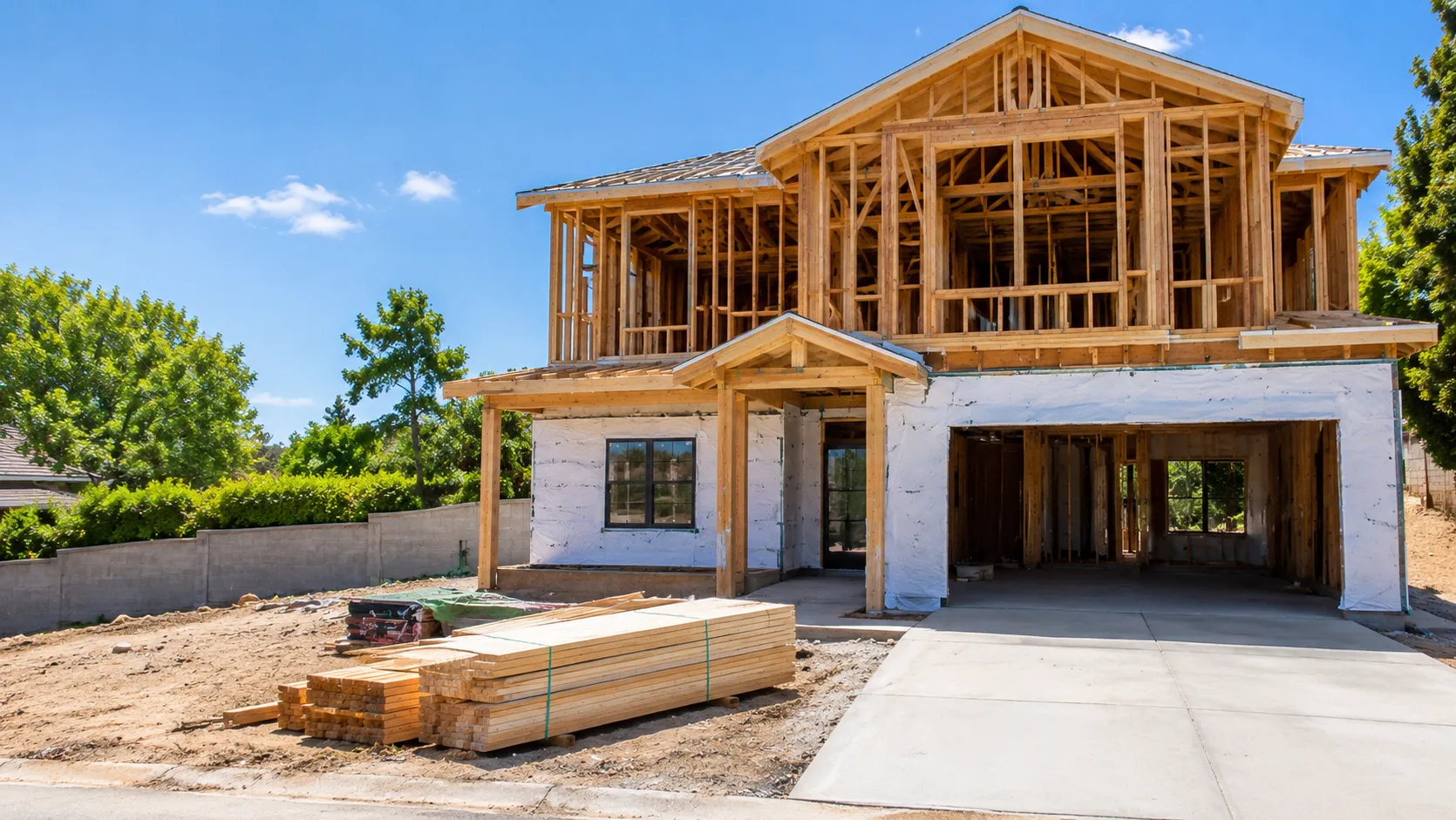
Ground-up financing in Santa Ana, CA
New Construction Loans in Santa Ana
Send us your lot, plans and budget, and we'll put it in front of lending partners who finance ground-up work in Orange County.
Get a Free Quote for New Construction Loans
Building from the Ground Up with New Construction Loans in Santa Ana
Most of Santa Ana's buildable land is already spoken for, which is why new projects tend to be small infill lots, teardowns of mid-century single-story homes, or rear-yard ADUs behind existing houses. New Construction Loans in Santa Ana fit that kind of work well, because the lenders we work with look at the lot, the plans and the finished value instead of your tax returns.
Construction financing isn't one lump sum. Funds typically cover part of the land and then release in stages as the building progresses, so the structure of the loan matters as much as the rate. We go through your plans, budget and builder experience, then take it to lending partners who fit a project of your size and timeline. Terms vary by lender and deal, and nothing is guaranteed until a lender reviews your file. Get a free quote →
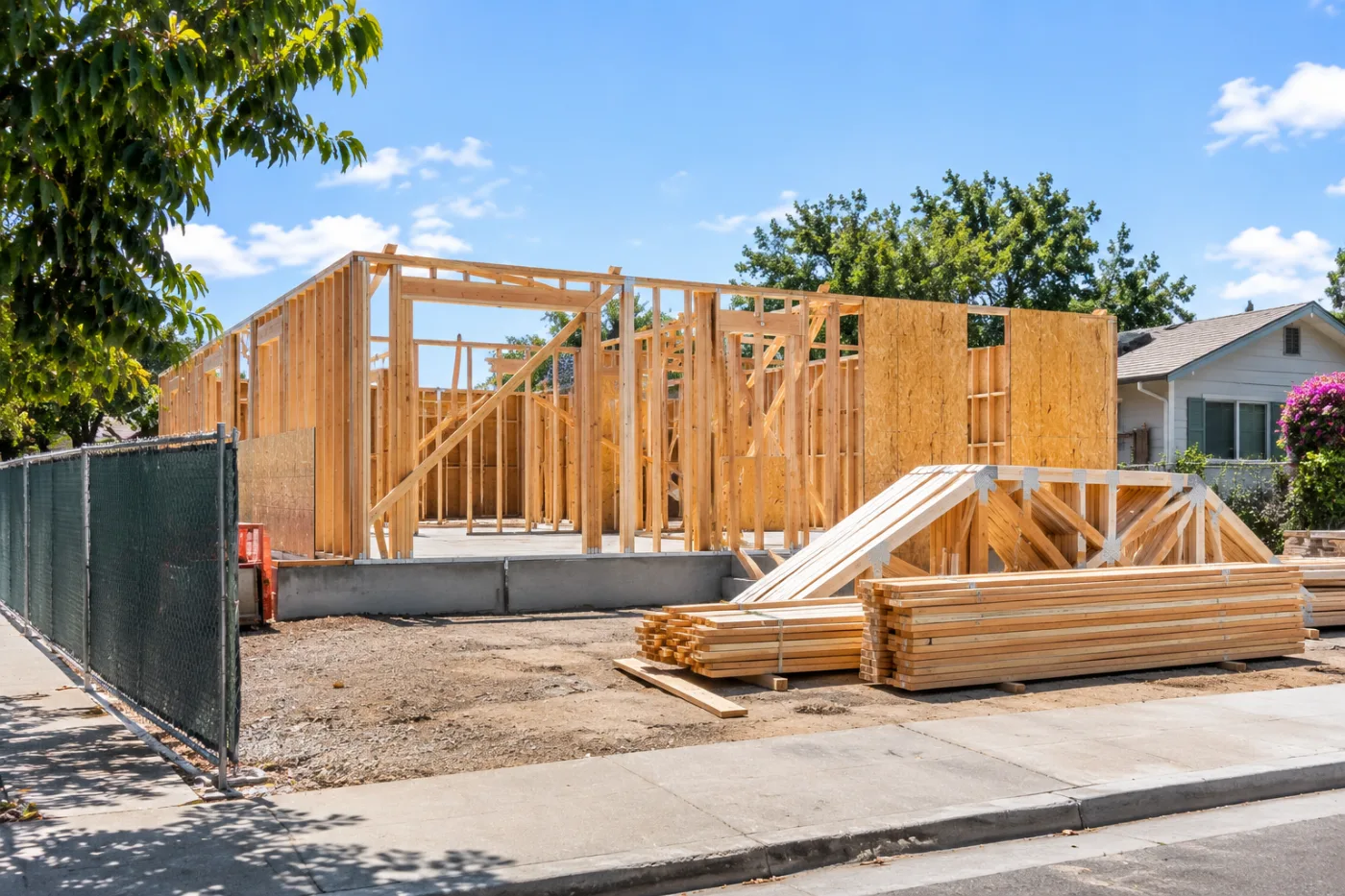
How Ground-Up Loans Work on a Santa Ana Lot
Land and construction costs are usually financed together, but they're treated differently. Lenders often advance a percentage of the purchase price at closing and hold the construction portion back to be released as work is completed. Many ask for meaningful cash in the deal, and typical market leverage on total cost runs somewhere around 65 to 80 percent, depending on the lender and your track record.
Permits shape your schedule more than most people expect. In Santa Ana, plan review and building permits run through the city's Planning and Building Agency, and a lender will want to see approved plans, or a clear path to them, before releasing much money. Budget real time for corrections and resubmittals, since they can push your start date.
Draws follow inspections. After you finish a phase such as foundation, framing or rough mechanicals, an inspector verifies the work and the lender releases the next payment. You'll usually front some costs and get reimbursed, so keep cash on hand between draws and pay your subcontractors on a rhythm the draw schedule can support.
Property type changes the conversation. Single-family infill, small multifamily and detached ADUs are each underwritten a bit differently, and California's ADU rules have opened up options on many residential lots. Check zoning and setbacks for your specific parcel with the city before you rely on any plan, since lot conditions vary a lot from street to street.
Your exit should be settled before you break ground. Most builders either sell the finished home or refinance into longer-term financing once it's complete, and lenders will ask which one you're planning. If you intend to hold, ask early about the refinance path so you're not scrambling when the construction term ends.
Ground-Up Single-Family Builds
Financing for a new home on a vacant lot or a cleared teardown site. Lenders typically look at your budget, plans, and the projected sale value of the finished house.
ADU and Small Multifamily Projects
Detached units, garage conversions and small rental buildings on residential lots. These suit owners who want added rental income, and lenders usually want to see permit status and a realistic cost breakdown.
Land Plus Construction Packages
One loan that covers the lot purchase and the build, with the building portion released in stages. It cuts down on separate closings, though it usually requires more cash up front.
Spec Builds for Sale
Homes you build to sell rather than keep. Lenders tend to weigh your past projects and the neighborhood's recent sales more heavily here.
What Construction Financing Typically Costs
| Cost item | Typical range | What affects it |
|---|---|---|
| Interest rate | Often around 9% to 13% a year, interest-only | Your experience, leverage, and the project's risk |
| Origination points | Commonly 1 to 3 points | Loan size and lender policy |
| Draw and inspection fees | A modest fee per draw, varies by lender | Number of draws and the inspection process |
| Loan term | Typically 6 to 18 months | Build scope and permit timing |
These are typical market ranges for comparison only, not quotes, and actual terms depend on the lender and your project.
Why Choose Us for New Construction Loans?
We read plans before we pick lenders
A lender who's comfortable with a ground-up build in Orange County is a different call than one who mostly does rehabs, so we sort that out first.
Straight talk about cash and timing
We tell you early what down payment, reserves and draw timing you're likely to need, so the budget holds up when real invoices arrive.
One conversation, several options
You describe the project once and we take it to our lending partners, which gets you to a decision faster than cold-calling around.
How We Get Your Build Moving
Share the project
Send the lot address, plans or concept, budget and your building experience.
Review the numbers
We go through land cost, construction budget and projected value to see what's realistic.
Choose lenders to approach
We look for programs built for ground-up work of your size and in your area.
Compare terms
You weigh leverage, points, draw rules and term length before committing.
Line up the draw plan
We help you understand the documents and inspection steps so funding keeps pace with construction.
New Construction Loans Across Santa Ana, CA
Ready to Get Started?
Got a lot or a teardown in mind? Call (657) 356-6271 and tell us what you plan to build.