Can You Get a Hard Money Loan With Bad Credit? An Orange County Guide
Yes, you can get a hard money loan with bad credit, but not from every lender. Hard money lenders lend mostly against the property, so the deal, your cash in it and your exit usually matter more than your score. Many still pull credit, though, and some set a minimum or price the loan by it. With a low score, expect to bring more cash or accept a smaller loan, and expect some lenders to pass.
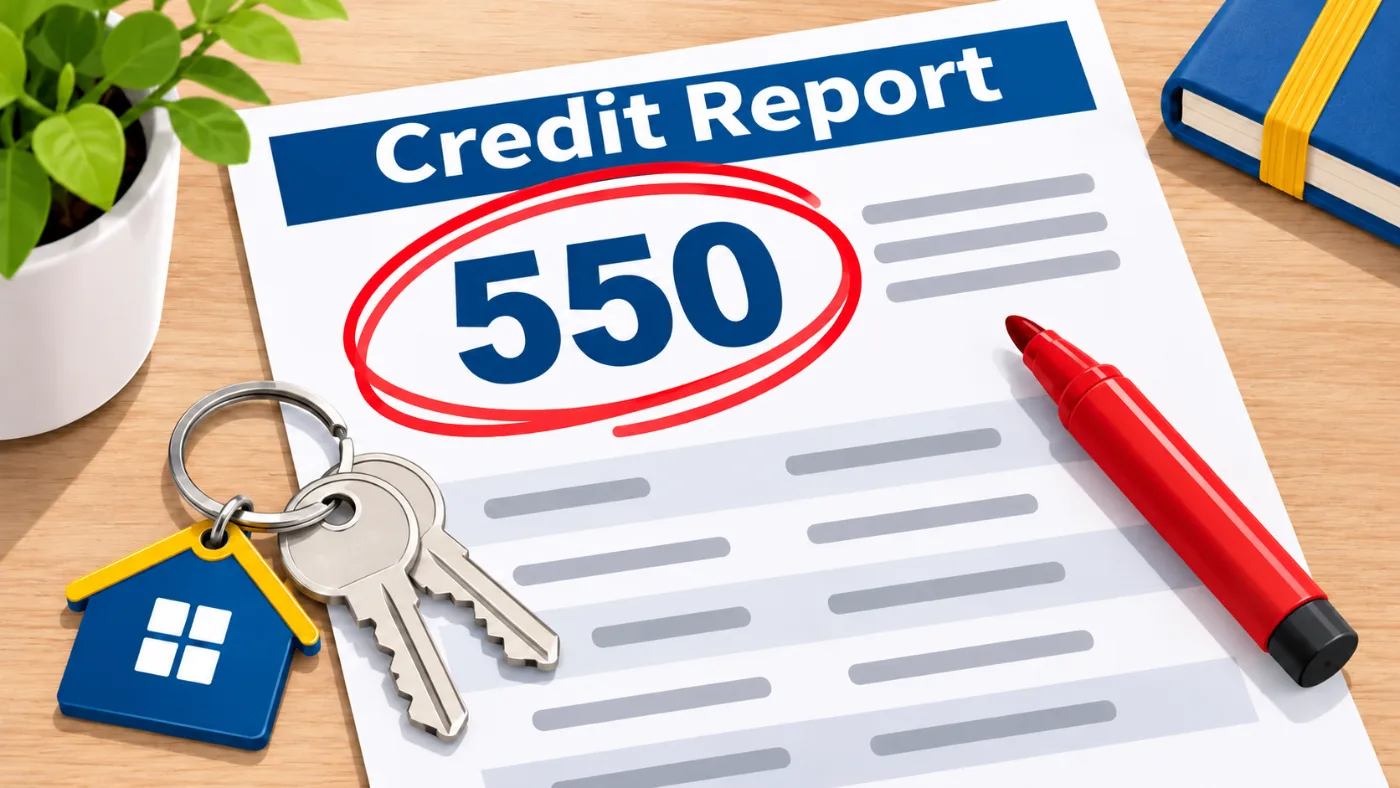
Why credit matters less for hard money
A bank decides mainly on you: income, debts and credit history. A hard money lender decides mainly on the property. If you stop paying, the lender's protection is the house, so its first questions are what the property is worth today, what it will be worth after the work, and how much of your own money is in it.
That's why investors with past credit problems can often still get funded. A strong deal with real equity can outweigh a weak score.
When your credit still matters
Less important isn't the same as ignored. How much weight credit gets depends on the lender:
- Some lenders don't set a minimum score at all and look at credit only for red flags.
- Some set a minimum and won't go below it, no matter how good the deal is.
- Many use credit in pricing, so a lower score can mean a higher rate, more points or a smaller loan.
- Most look closely at recent events: an open bankruptcy, a recent foreclosure, or tax liens and judgments that could attach to the property.
For reference, FICO scores run from 300 to 850, and myFICO labels anything below 580 as poor and 580 to 669 as fair. A score in those ranges narrows your options, but it doesn't close them.
What lenders look at instead
What can outweigh a low credit score
| Factor | Why lenders care | How to strengthen it |
|---|---|---|
| Your cash in the deal | Equity protects the lender if the project goes wrong | Put more down, or pay part of the rehab yourself |
| The property and its value | It's the lender's real security | Buy at a price backed by recent nearby sales |
| After-repair value and scope | Shows the loan will be covered when the work is done | Give the lender a written scope and budget |
| Your exit plan | The loan gets repaid from a sale or a refinance | Show comparable sales or a lined-up refinance |
| Experience | Finished projects lower the lender's risk | Share past deals, or partner with an experienced investor |
| Cash reserves | Covers payments and surprises during the project | Show a few months of payments in the bank |
How bad credit changes the terms
On the Santa Ana area's typical ranges, about 9% to 13% interest and 1 to 3 points, a lower score usually lands you toward the higher end. Expect some mix of these:
- A smaller loan compared with the property's value, so you bring more cash.
- A higher rate or more points.
- A request for larger cash reserves.
- Fewer lenders willing to quote, and more questions from the ones who do.
Compare offers on total cost for your expected hold, not just the rate. Our guide to using a hard money loan to flip houses walks through that math on a sample Orange County deal.
Problems that can stop a deal regardless of score
Some issues matter more than the number itself. An open bankruptcy, a foreclosure on another property in the recent past, or unpaid tax liens and judgments can stop a loan, especially if they could attach to the new property's title. Each lender has its own rules and waiting periods, so be upfront early rather than letting the title report surprise everyone at closing.
How to improve your odds
- Pull your own credit reports first. The FTC says AnnualCreditReport.com is the only site authorized for free reports, and you can check each bureau weekly.
- Write a short, plain explanation of any credit event: what happened, when, and what's changed since.
- Bring more cash to the deal. Equity is the strongest answer to a weak score.
- Pick a deal with a clear after-repair value backed by recent sales, not a stretch.
- Show your track record, or partner with an investor who has one.
- Keep reserves on hand for payments and surprises.
If your credit isn't perfect and you have an Orange County deal, send us the details through the form below. You're in the right place, and we'll get it in front of our lending partners. You can also see everything we help with on our homepage, including fix-and-flip loans and bridge loans.
Frequently Asked Questions
Can I get a hard money loan with a 550 credit score?
Possibly. Some hard money lenders have no minimum score and focus on the property and your equity, while others won't go that low. Expect to bring more cash and pay more.
Do hard money lenders check credit?
Most do pull credit, but many use it to spot red flags or set pricing rather than to make the decision. The property and your cash in the deal usually matter more.
Can I get a hard money loan after bankruptcy or foreclosure?
Sometimes, depending on how recent it was and the lender's rules. An open bankruptcy or recent foreclosure narrows your options, so mention it early.
Will a hard money loan help my credit?
Don't count on it. Some hard money lenders don't report to the credit bureaus, so ask, and plan on rebuilding credit separately.
Can I use a hard money loan for the home I live in?
Hard money loans are generally made for investment and business purposes, not a primary residence. If you plan to live in the home, a different kind of loan usually fits.
More on this topic: Hard Money Lenders Santa Ana Group
Get a Free Quote
Tell us about your project and we'll get back to you with next steps.
- Deal-first conversations
- Lenders sorted for you
- Speed that fits deadlines
- Honest about the tradeoffs